
College Sports Money Attracts Interest from Congress and Private Equity
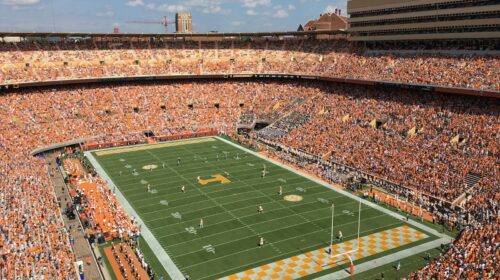
The big money in college sports is only growing bigger, as highlighted by the hundreds of millions in buyout funds (subscription required) universities owe to fired football coaches. Much of the recent focus has been on litigation forcing the NCAA to allow players to capitalize on the market for their abilities in the form of name, image, and likeness (NIL) deals. But now at least one member of Congress wants to take a broader look at the business of college athletics, even as private equity investors explore how to become involved in that business.
Last month, U.S. Senator Maria Cantwell (D-WA) asked the Joint Commmittee on Taxation to analyze the proper tax treatment of college athletics. More specifically, she asked the analysis to address the following issues:
• The implications of no longer allowing the NCAA, member institutions, and their affiliated athletic conferences to operate as tax-exempt organizations.
• The implications of subjecting revenues from college athletic activities to unrelated business income tax (UBIT), including the impact of such changes on the underlying financial operations of colleges and universities.
• In Chief Counsel Memorandum AM 2023-004 and several recent private letter rulings, the IRS has determined that most NIL collectives primarily provide private benefits to student athletes, and as a result, they do not qualify as tax-exempt organizations. Should Congress consider codifying tax rules with respect to the operation of NIL collectives?
• Has the IRC Section 4960 excise tax been effective in reigning in excessive compensation to college coaches? Are there other measures Congress could consider with respect to addressing excessive compensation for coaches? Are there measures Congress could consider to address excessive compensation paid to coaches or other athletic department personnel who are fired (i.e. buy outs)?
• As athletes now have the right to earn compensation for their name, image, and likeness (NIL) and be compensated directly by the schools, how would the tax implications for the athletes differ depending on whether they ultimately are classified as employees or independent contractors for tax purposes?
This inquiry comes at the same time that Congress is considering legislation to address NIL and related issues through federal law (SCORE Act, H.R. 4312). Coverage: Politico (subscription required); USA Today.
The inquiry also comes at the same time the schools and conferences are exploring possible private equity investment in their sports activities. The University of Utah announced what appears to be the first such arrangement (with a goal of raising $500 million) earlier this week, as reported by CNBC. Additional coverage: ESPN; Sportico (subscription required); The Athletic (subscription required). And according to ESPN the Big Ten conference also explored a private equity investment, only to pause that exploration because of objections from some members. Additional coverage: Inside Here Ed; USA Today.